
Many people want help staying sober or staying within a limit, but do not want a bulky alcohol interlock device in their car or something that screams “problem.” The goal is simple: a private way to monitor alcohol and stay accountable. Here are five of the strongest options based on real user feedback:
Our top professional picks for home alcohol monitoring
These are the most trusted and reliable alcohol monitoring devices on Amazon, carefully chosen for accuracy, ease of use, and long term value.

- #1-RATED BREATHALYZER BY WIRECUTTER - "After 65 hours of research, which included getting intoxicated at a police station to test personal breathalyzers alongside law enforcement equipment, we're sure the BACtrack S80 is the most accurate, reliable, and easiest-to-use personal breathalyzer that you can buy." - TheWirecutter, February 2022

- ✅ 𝐏𝐫𝐨𝐟𝐞𝐬𝐬𝐢𝐨𝐧𝐚𝐥 𝐀𝐜𝐜𝐮𝐫𝐚𝐜𝐲, 𝐓𝐫𝐮𝐬𝐭𝐞𝐝 𝐑𝐞𝐬𝐮𝐥𝐭𝐬:Engineered with advanced sensor technology, our professional alcohol breathalyzer tester delivers consistent and reliable BAC readings. This high-performance breathalyzer provides clear feedback to help you make safe decisions about driving or operating machinery after consuming alcohol.

- ESTIMATE YOUR ALCOHOL LEVEL WITH PRO-GRADE ACCURACY - Powered by BACtrack's patented BluFire Fuel Cell Sensor, the C6 utilizes the same professional-grade technology trusted by hospitals, clinics, and even law enforcement.
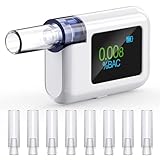
- 🎯 𝐈𝐍𝐒𝐓𝐀𝐍𝐓 𝐑𝐄𝐀𝐃𝐎𝐔𝐓 𝐖𝐈𝐓𝐇 𝐁𝐀𝐂 𝐑𝐀𝐍𝐆𝐄 𝐀𝐋𝐄𝐑𝐓𝐒:PortaLite breathalyzer provides accurate readings in seconds on its large, clear digital screen. For immediate understanding, it features a Tri-color BAC Alert system (Green <0.02% (Safe), Yellow 0.02%-0.05% (Caution), Red ≥0.05% (Danger)) that gives you a clear visual signal of your estimated range alongside the precise number. This reliable alcohol breathalyzer tester helps you make informed personal decisions quickly after drinking.

- QUICKLY & EASILY ESTIMATE YOUR BAC - Proprietary Advanced MicroCheck Sensor technology delivers results in seconds.
Why look for alcohol interlock alternatives in the first place
Traditional alcohol interlock devices are usually court ordered and fixed in a vehicle. They can be expensive, intrusive, and pretty awkward when someone else is in the car. Many people who are serious about change do not actually need a court device. They need personal tools that support their goals without adding more stress.
This is where personal alcohol monitoring comes in. These tools are more flexible, easier to live with, and often cheaper over time. They can support someone in recovery, a parent keeping an eye on a teen driver, or simply a person who knows they tend to underestimate “just a few drinks.”
Personal alcohol monitoring works best when it feels like a helpful partner, not a punishment.
There are a lot of products that promise accurate readings or “professional grade” performance. Many are good. Some are not. The rest of this guide walks through what to look for, how these alternatives work, and what actually matters when spending money on one.
Main types of alcohol interlock alternatives for personal use
Personal monitoring does not need to copy car interlock systems. There are several categories, each with different strengths and limits.
1. Handheld breathalyzers
Handheld breathalyzers are probably the closest thing to an interlock, but portable and private. You breathe into a small device and get a blood alcohol concentration (BAC) reading after a few seconds.
These are useful when someone wants quick answers before driving, working, or going home after a night out. They can also be part of a routine, for example a nightly check during early recovery.
| Feature | Handheld breathalyzer |
|---|---|
| Size | Pocket sized, fits in bag or glove box |
| Main use | Check BAC before driving or at home |
| Setup | Usually just insert batteries and go |
| Accuracy level | Ranges from basic to law enforcement grade |
| Privacy | Very private, no automatic reports unless app linked |
Better models use fuel cell sensors, which are more accurate and tend to last longer. Cheaper models often use semiconductor sensors that drift over time and need more frequent calibration or replacement.
2. Smartphone connected breathalyzers
These are smaller breathalyzers that connect to a phone using Bluetooth. The reading appears in an app, sometimes with graphs, notes, and sharing options.
For some people, this extra data really helps. You can see patterns, log how you feel versus what your BAC says, and send results to a partner, sponsor, or therapist. For others, the app is too much, and the extra steps get annoying. Personal preference matters a lot here.
Connected breathalyzers are ideal for people who like stats, streaks, and clear feedback over time.
3. Wearable alcohol sensors
Wearable alcohol devices are usually worn on the wrist or ankle. Instead of breath, they measure alcohol in sweat or through the skin. Some models are medical grade or legal grade, while others are consumer products.
These are closer in spirit to an official monitor, but without the same level of visibility as a court ordered bracelet. The benefit is continuous or frequent tracking, so you are not relying on self control to remember to test.
There are limits though. Wearable sensors can lag behind blood alcohol by up to an hour, and they may be less accurate than a high quality breathalyzer. They work better for overall patterns than split second decisions about driving.
4. App based check-in systems with connected devices
Some services combine a breathalyzer with a structured check-in system. You might receive random test prompts on your phone, use your personal device, and the result is logged with time, location, and sometimes photo or video confirmation.
This approach is often used by people in early recovery who want external accountability without a formal legal order. It can also help parents, employers, or treatment programs monitor use in a more flexible way.
5. Simple at home tests as light monitoring
There are basic alcohol test strips or simple disposable testers. These are not as accurate as electronic devices, and they are rarely a good choice for safety decisions like driving. Still, some people use them as a light reminder when trying to cut down or track.
They might work as a starting tool, but for serious personal monitoring, an electronic breathalyzer or structured system is usually a better path.
What really matters when choosing a personal alcohol monitoring device
It is easy to get distracted by fancy screens or bold marketing claims. The core factors are more plain: accuracy, consistency, ease of use, long term cost, and how well the device fits the reality of daily life.
Accuracy and sensor type
Accuracy is the foundation. Anything else is secondary.
Most personal breathalyzers fall into two groups:
- Fuel cell sensor breathalyzers
- Semiconductor sensor breathalyzers
Fuel cell sensors are usually found in professional and law enforcement devices. They tend to:
- Provide more accurate readings across different BAC levels
- Be less affected by substances like mouthwash or breath spray
- Hold calibration better over time
Semiconductor sensors are cheaper, but they can be more sensitive to temperature, humidity, and other substances. The reading might be fine one day and off the next if the device starts to drift.
For anyone using a device for safety, legal risk, or serious recovery, a fuel cell sensor is usually worth the extra cost.
Calibration and maintenance
Every breathalyzer, even a premium one, needs calibration or replacement of the sensor after a certain number of uses or months. This is normal. Ignoring calibration is one of the fastest ways for a good device to become unreliable.
Things to pay attention to:
- How often the manufacturer recommends calibration
- Whether calibration requires shipping the device or can be done with cartridges
- Cost of calibration or sensor replacement
If the calibration process is expensive or difficult, many users end up skipping it, which defeats the whole point of having a monitor.
Speed and ease of use
When someone is tired, frustrated, or tempted, complicated steps turn into skipped tests. A good device should be quick, simple, and feel almost automatic.
Helpful features include:
- Fast warm up time
- Clear screen with easy to read numbers
- Simple single button operation
- Reusable mouthpieces that are easy to clean or replace
App connected devices add some extra steps but can be worth it if the person values data and accountability.
Reliability and build quality
Cheap plastic housings, loose battery covers, or wobbly mouthpieces can be signs that a device will not hold up. A monitor that works for a month and dies quietly in a drawer does little good.
Look for repeated comments in reviews about durability, not just someone saying “it feels solid.” Reports of consistent performance after many months are far more valuable than first week impressions.
Data, logging, and sharing
Some people want a standalone device that shows a number and nothing more. Others want graphs, trends, history, and sharing tools. There is no single right answer.
App based models can usually:
- Store past results with date and time
- Display charts over days or weeks
- Export or share data with a support person
- Send reminders for scheduled tests
That kind of structure can be powerful for someone in early recovery or anyone who tends to be impulsive. Still, it can feel like too much pressure for someone who wants quiet self monitoring without another app sending alerts.
Discretion and stigma
One of the main reasons to look beyond traditional interlocks is stigma. People do not want coworkers, dates, or friends to see a bulky device wired into a car.
Personal monitors vary a lot in how discreet they are:
- Small handheld units can look like a key fob or tiny remote
- Some wearables look like fitness bands
- App based systems might require taking a photo while testing, which is less private
Privacy also ties into data. A device that automatically sends results to others is powerful, but it removes full control. That can be good or bad, depending on the situation.
Long term cost
Sticker price is only part of the cost. Over time, other expenses appear:
- Calibration fees or replacement sensors
- Mouthpiece replacements
- Batteries or charging cables
- Subscription fees for some app based systems
A slightly more expensive device with low maintenance cost can be cheaper after a year compared to a cheaper device that requires frequent service or paid plans.
Pros and cons of using personal alcohol monitoring instead of an interlock
Personal monitoring has a lot of benefits, but it is not perfect. It helps to see both sides clearly.
Key advantages of personal alcohol monitoring
- More privacy than a car interlock
- Can be used anywhere, not only in a vehicle
- Supports earlier change before legal trouble happens
- Flexible: can fit social drinkers, people cutting down, and those in recovery
- Often far cheaper than professionally installed systems
- Less shame or public exposure, which helps many people stick with it
- Some models track patterns over time, which can guide therapy or self reflection
- Parents can use them to guide teen drivers without adding a permanent car device
- Recovery sponsors or coaches can use readings as part of check-ins
- Easier to replace or upgrade if something better comes out
Real limits and drawbacks to consider
- Self testing depends on honesty and follow through
- Devices can be skipped during high risk moments
- Inaccurate or poorly calibrated devices can create false confidence
- Wearables may delay or miss quick spikes in BAC
- Some devices need subscriptions or regular calibration, adding cost
- Possible data privacy concerns with app services
- Tests do not fix underlying problems like stress, trauma, or mental health issues
- Family members might over rely on the device and ignore other signs
- Car interlocks physically prevent driving, while personal monitors only inform
An alcohol monitor is a tool, not a cure. It works best as part of a wider plan that may include therapy, groups, or medical support.
How to match the right alcohol monitoring alternative to your situation
Choosing a device is easier when you start with a clear goal instead of starting with a product list. Different goals lead to different best choices.
For someone cutting down or staying below a limit
If the goal is “never drive over a safe limit” or “keep nights out in check,” a straightforward, accurate breathalyzer is usually enough.
Helpful features:
- Fuel cell sensor
- Fast warm up and quick results
- Simple interface without required app
- Strong user reports about accuracy and stability
A person in this group might use the device:
- Before driving
- Midway through an evening to decide whether to slow down
- At home to better understand how drinks translate into BAC
For someone in early recovery or after a serious incident
When there has been a DUI, health scare, or family crisis, stakes feel higher. Personal monitoring can play a strong role alongside treatment or support groups.
What tends to help in these cases:
- High accuracy fuel cell breathalyzer or structured app system
- History logs that can be shared with a counselor or accountability partner
- Random or scheduled check-ins through an app or agreement
- Clear plan for what happens if a test shows alcohol use
Some people benefit from clear external accountability, where results are automatically shared with someone they trust. Others feel too pressured by that and do better with self monitoring plus therapy.
For parents monitoring a teen driver
Parent and teen relationships around alcohol are tricky. A balance between safety and trust is needed.
Possible approaches:
- Handheld breathalyzer kept in the car or at home
- Agreed testing times, for example, when returning the car at night
- Clear written rules on what happens if alcohol is detected
Some families choose app based systems with photo confirmation and location stamps. Others use a simple device plus honest conversation. The right answer depends on history, trust levels, and risk.
For ongoing health tracking
People who are more health focused might want to track how even small amounts of alcohol affect sleep, energy, or anxiety. For them, device choice can be a mix of practicality and curiosity.
A basic breathalyzer combined with a health journal or wearable sleep tracker can show some patterns, without shifting into a rigid or punitive mindset.
Key features to compare when shopping
When two devices look similar, these details often break the tie.
| Feature | What to look for | Why it matters |
|---|---|---|
| Sensor type | Fuel cell over basic semiconductor | More accurate readings, especially over time |
| Accuracy claims | Clear BAC range and tolerance (for example, within 0.005) | Shows the brand has actual testing standards |
| Warm up time | Short start up, under a few seconds if possible | Makes regular use much more realistic |
| Test time | Result in a few seconds after blowing | Helps during quick checks before driving |
| Power source | Rechargeable battery or common replaceable batteries | Reduces the risk of dead device when needed |
| Display | Clear backlit screen, easy to read numbers | Critical during night use or for users with vision issues |
| History logging | On device memory or app records | Useful to track progress and spot trends |
| Connectivity | Bluetooth to app, or standalone only | Some users want graphs and sharing, others do not |
| Calibration process | Clear schedule, easy access to service or kits | Supports accuracy over the long term |
| Portability | Lightweight, fits in pocket or small bag | Makes it easier to carry it when it matters most |
Practical tips for getting accurate readings from any breathalyzer
Even an excellent device can give strange numbers if used badly. A few simple habits can make readings far more reliable.
- Wait at least 15 minutes after drinking before testing, so alcohol in the mouth does not confuse the sensor
- Avoid testing right after using mouthwash, breath spray, or smoking
- Follow blowing instructions carefully, including blow length and strength
- Repeat the test once or twice if a result looks very odd compared to how you feel
- Keep the device stored in a moderate temperature, not in a very hot or very cold car
- Replace or clean mouthpieces as directed
- Stick to the calibration schedule instead of waiting for obvious problems
Some people like to do a few “practice nights” at home. They test several times through an evening and the next morning. This helps them learn how their own body responds to specific amounts of alcohol and food, which can be quite eye opening.
Building alcohol monitoring into daily life without burning out
Devices are tools, but habits decide whether they help. A simple routine is more likely to last than a strict, complicated plan.
Many people find it useful to tie testing to specific triggers:
- Before any time they might drive after drinking
- At a set evening time each day while building a streak of sober days
- After stressful events, to check if “just one drink” does or does not happen
It can also help to define what different BAC ranges mean personally. For example:
- 0.00: clear to drive, fully sober
- 0.01 to 0.03: light effect, only if not driving
- 0.04 and above: strong signal to stop, do not drive, reconsider habits
These are only examples, and safe limits depend on local law and medical advice, but having clear rules removes some on-the-spot debating with oneself.
Frequently asked questions about alcohol interlock alternatives for personal monitoring
Are alcohol interlock alternatives as accurate as court ordered devices?
Some personal breathalyzers use the same type of fuel cell sensors found in official devices and can be quite accurate when well calibrated. Others, especially very cheap models, may drift or respond to non alcohol substances. Reading user reviews, checking for fuel cell technology, and following calibration schedules help narrow the field to more reliable options.
Can alcohol interlock alternatives actually prevent drunk driving?
Personal devices cannot lock a car ignition. They cannot physically stop someone from driving. They can, however, give clear, immediate feedback that might interrupt an impulsive choice. Many people respond strongly when they see an actual BAC number instead of guessing. Some choose to make a personal rule that they will not drive if the device reads above a certain level.
How private are alcohol interlock alternatives for home use?
Handheld breathalyzers without app connections are very private, since results stay on the device. App based systems may store results on company servers or share them with selected contacts. Before using one of those, it is worth reading the privacy policy and deciding who will see what. For people who want full privacy, a standalone unit with no automatic uploads is usually more comfortable.
Do alcohol interlock alternatives work for teens or young drivers?
They can help, but they are not magic. For teens, any monitoring plan works better as part of a clear agreement: when tests will be done, what the rules are, and what happens if someone breaks them. Some parents prefer simple spot checks at home, while others use structured app systems. The most effective setups mix monitoring with honest dialogue about risk, rather than relying only on the device.
How often should a personal breathalyzer used as an interlock alternative be calibrated?
Manufacturers usually recommend calibration after a certain number of tests or after a span of months, whichever comes first. The exact schedule varies by brand and model. For anyone making safety decisions from readings, following those guidelines closely is wise. Skipping calibration increases the chance of false results over time.
Are wearable alcohol monitors a good substitute for an alcohol interlock?
Wearable monitors can offer continuous or frequent tracking, which is helpful for spotting patterns or confirming sustained abstinence. They are less suited for making quick decisions about driving because they can lag behind real time blood alcohol. They can be a good option for long term accountability, but they do not replace the immediate safety features of a car interlock.
Can alcohol interlock alternatives help someone stay sober long term?
They can support sobriety, but they are only one part of the picture. Many people use monitors alongside counseling, peer support groups, medication, or other strategies. A device can highlight progress, confirm honesty, and give early warning signs. Real change, however, tends to come from a mix of support, habit change, and sometimes medical care.
What is the best alcohol interlock alternative for someone who hates apps and technology?
In that case, a well built, standalone fuel cell breathalyzer is usually the best match. No pairing, no accounts, no data sharing. Just a clear number on a screen. Many people who feel overwhelmed by tech stick with monitoring much longer when it is this simple.
So is a personal alcohol monitor worth it?
For some people, yes. For others, not really.
If alcohol has already led to close calls, strained relationships, or health warnings, having a small device that tells the truth can change the way choices feel in the moment. If someone already drinks rarely and safely, a monitor might just gather dust.
The real question is this: would seeing real, honest numbers about alcohol use change the way choices are made?
If the answer is yes, then a thoughtful alcohol interlock alternative for personal monitoring can be a strong ally on the path that comes next.

