
If you are tired of juggling heavy case files, laptop, and personal items through airports or court corridors, a durable rolling briefcase can feel less like a luxury and more like a quiet form of self-defense against daily strain. Here are five strong options that stand out from real user feedback and long-term performance:
Top Rated Rolling Briefcases For Case Files
These recommendations are based on durability, storage layout, and comfort, carefully filtered from hundreds of models so you do not have to guess what actually works in daily use.
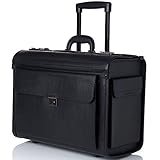
- TSA Approved : Alpine Swiss carry-on size measurement 19" x 14" x 9", TSA approved carry-on size for all carriers. Our briefcase Interior measurements are 17" x 13 1/4" x 7 1/2". Weight carrying capacity is 44 lbs.

- TRAVEL FRIENDLY – The Alpine Swiss 4 wheel rolling briefcase makes a great travel companion. The spacious case measures 19” L x 17.25” H x 9” W overall. Interior measurements are 17” L x 8.5” W x 13.25” H. Smooth 360 degree spinning wheels.
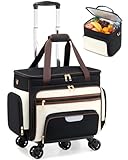
- Teacher-Tested Organization with 15 Pockets-Master Classroom Chaos: Size at 17"Lx12.6"Wx13.7"H 43*32*35cm, 48L, dedicated 15.6"-16" laptop compartment, Accordion File Organizer, 2 side pockets (water bottles/umbrellas), plus specialized compartments for markers, tech, and papers – including zippered document slots, elastic loops, and quick-grab mesh pouches. Magic-secured base of Amythe folding trolley cart for teachers prevents shifting
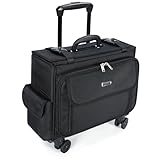
- External handle system for flat packing. External trolley handle keeps the main compartment flat and easier to pack. This rolling bag for work fits a 17.3 inch laptop and legal folders. A smart pick among bags for work with wheels and a roller bag for work trips.

- TSA CARRY ON SIZE – Measures 19" x 14" x 9" TSA approved carry-on size for all carriers. Interior measurements 17" x 13 1/4" x 7 1/2". Weight Capacity 44 lbs.
Why A Durable Rolling Briefcase Matters When You Carry Case Files
Anyone who hauls case files for work knows the routine: one hearing in the morning, client meeting in the afternoon, maybe some travel in between, and a mountain of documents that must stay organized and protected the entire time.
Now add a laptop, chargers, notepads, reference books, and personal items on top of those files. A regular bag or flimsy roller becomes a weak point very quickly. Handles crack, wheels wobble, zippers separate, and suddenly the thing that was supposed to help only adds stress.
A good rolling briefcase should do three jobs: protect your documents, move smoothly over different surfaces, and survive daily abuse without falling apart.
This is why durability matters so much. For anyone in law, finance, healthcare administration, consulting, or any paperwork-heavy field, the bag is part of the workflow. A poor choice slows everything down. A strong, well designed rolling briefcase quietly supports your routine and protects work that you cannot afford to lose.
Key Features That Make A Rolling Briefcase Good For Case Files
Not every rolling bag that looks businesslike is ready for heavy case files. Many are built for light travel, not serious daily document hauling. Here are the factors that separate a proper workhorse from a fragile travel accessory.
1. Structure And Protection For Documents
Case files need to stay flat, clean, and easy to access. That sounds basic, but many bags fail at this.
Look for these structural points:
-
Rigid or semi-rigid frame: This keeps folders from bending or crumpling when the bag is full or when it is under a plane seat or in a car trunk.
-
Reinforced base: A strong bottom panel, often with feet or skid plates, spreads weight evenly and prevents sagging that can wrinkle documents.
-
Dedicated file section: A compartment sized for legal or letter folders, with dividers or rails, keeps everything upright and separated.
-
Protective side walls: Thicker, padded sides protect both documents and electronics from bumps and mild impact.
If a rolling briefcase collapses in on itself when loaded, it is not a true case-file bag, no matter how professional it looks.
Soft totes are fine for light days. For serious paperwork, a more structured shell will serve much better over time.
2. Wheel Quality And Stability
Cheap wheels are usually the first thing to fail. They rattle on sidewalks, jam on small pebbles, and wear flat on one side. That might not sound serious, until it happens when you are rushing to court or across a large campus building.
Focus on:
-
Wheel type: Look for robust inline skate style wheels or larger rubberized wheels that roll over cracks and tiles more smoothly.
-
Wheel mounting: Solid brackets that are bolted to reinforced points on the frame last much longer than thin, exposed hardware.
-
Wheel placement: Wider spacing between wheels adds stability and reduces tipping when the bag is full or when you turn sharply.
-
Bearing quality: Good bearings feel smooth, not gritty, and require less pulling effort over long distances.
2-wheel designs usually track better behind you for long walks and handle curbs more easily. 4-wheel setups offer smoother rolling in tight indoor spaces, but for heavy files, 2 strong rear wheels are often more durable.
3. Telescoping Handle Strength And Comfort
After wheels, the handle is the next failure point in many rolling briefcases. If it bends, sticks, or wobbles, you feel it every single day.
Pay attention to:
-
Material: Metal telescoping tubes with solid joints feel more secure than thin, hollow plastic. The metal should not flex much under full load.
-
Height adjustment: Several locking points help match different user heights and reduce strain on shoulders and wrists.
-
Grip design: A slightly cushioned, wide grip is much easier on the hand when dragging a heavy load across a large building or street.
-
Stability: The handle should not twist too much from side to side. Excessive wobble usually means shorter lifespan.
If the handle feels weak in a store or in a product photo, imagine it with years of daily use and a full load of files. That usually answers the durability question quickly.
4. Internal Layout For Case Files And Tech
The inside of the briefcase can make your day calmer or more chaotic. A good internal layout saves real time during hearings, meetings, or travel.
Look for a structure that separates:
-
Main file compartment: Roomy enough for thick case binders, accordion files, and expanding folders. Ideally with clear dividers or a file-rail system.
-
Laptop or tablet sleeve: Padded and sized correctly for your device, often against the back panel for stability.
-
Accessory pockets: Slots for pens, business cards, legal pads, small notebooks, and chargers so they do not float loose.
-
Quick access section: A front pocket or lid pocket for keys, ID, travel documents, or phones.
For anyone dealing with confidential files, a separate, zippered internal section can help keep sensitive documents away from casual view during travel or security checks.
5. Exterior Material And Build Quality
The outer shell faces rain, coffee spills, scuffs, and repeated pulling through doors, cars, and public transport. Small choices in materials add years of life.
Focus on:
-
Fabric or shell: Thick ballistic nylon, high-denier polyester, or reinforced synthetic blends usually hold up better than thin fabrics. Some prefer hard shells for extra protection, though they offer less flexibility.
-
Water resistance: A treated fabric or coated material helps protect paper files from light rain and splashes. Full waterproofing is rare, but some resistance is very helpful.
-
Reinforced corners: Hard or padded corner guards take the beating when the bag bumps into stairs, doors, or overhead bins.
-
Stitching and seams: Tight, even stitching and bar-tacked stress points (like handle bases and strap anchors) prevent splitting when the bag is very full.
6. Security Features
For people moving legal or confidential documents, a bit of security is useful. It will not replace proper document handling policies, but it can reduce casual snooping.
Security details to look for:
-
Lockable zippers: Dual zipper pulls on main compartments that can be linked with a small travel lock.
-
Hidden pockets: Discreet inner pockets for flash drives, small devices, or keys.
-
RFID-blocking compartments: Some bags include a small pocket that helps protect contactless cards and IDs from scanning.
These features matter more for some users than others. For many professionals, lockable zippers on the main file compartment are usually enough.
7. Size, Weight, And Carry Options
Size is a trade-off. Too large, and the bag becomes awkward and heavy. Too small, and files overflow or must be left behind.
Consider:
-
Capacity vs portability: If you regularly haul large litigation files, a wider, boxier case might be needed. For lighter, daily matters, a slimmer profile is easier in crowded spaces.
-
Empty weight: Some very durable bags are also quite heavy before anything goes inside. Balance toughness with what you can comfortably handle.
-
Extra carry handles: Strong top and side handles help when lifting into car trunks, onto shelves, or up short flights of stairs.
-
Shoulder strap (optional): A padded, detachable strap can be useful, but for heavy files it can strain one side of the body. Rolling should remain the main mode.
Common Types Of Rolling Briefcases For Case Files
Different designs suit different routines. A trial lawyer who travels cross-country has different needs than an office-based professional who walks two blocks between parking garage and building.
Traditional Rolling Legal Briefcase
This style usually looks like a classic rectangular case with wheels and a telescoping handle. It is built with files in mind first, everything else second.
Typical features:
-
Stiff, boxy frame that fits legal-size folders
-
Deep main compartment for binders and expanding files
-
Front organizer for pens, cards, small items
-
Top lid that opens wide for easy access on the floor or table
This is often the best choice for professionals who carry heavy paperwork daily and value structure and durability over sleek looks.
Rolling Laptop Briefcase With File Storage
These bags start as laptop cases and then add file sections. They often look more modern and streamlined than classic legal cases, which some users prefer for client meetings or corporate offices.
Typical features:
-
Padded laptop compartment, sometimes centered for balance
-
Narrow file sleeve or divided section behind or in front of the laptop
-
Extra pockets for chargers, mouse, and accessories
-
Smaller profile that fits well under airplane seats
This style suits professionals who carry a moderate amount of paperwork along with tech and want a bag that feels more like a rolling computer briefcase than a boxy legal case.
Hybrid Overnight / Case File Roller
Some rolling briefcases are built to cover both work and short trips. They have room for documents and a change of clothes, which is helpful for hearings or mediations that run long or require travel.
Typical features:
-
One compartment for files and laptop
-
Another compartment for clothing and toiletries
-
Straps or compression panels to keep items in place
-
Often slightly taller or deeper than pure briefcases
These are not for everyone, but for frequent travelers who cannot separate work from travel gear, a hybrid bag can cut down to a single piece of luggage.
Comparison Of Key Rolling Briefcase Features
The table below gives a quick way to compare major feature categories when choosing a rolling briefcase for case files.
| Feature | Why It Matters For Case Files | What To Prefer |
|---|---|---|
| Frame Structure | Keeps documents flat and protected | Rigid or semi-rigid shell with reinforced base |
| Wheels | Affects long-term durability and comfort | Large, rubberized, 2-wheel setup with solid brackets |
| Handle | Primary contact point while rolling | Metal, multi-stage, stable telescoping handle |
| File Storage | Organization and quick file access | Dedicated file compartment with dividers or rails |
| Laptop Protection | Protects expensive electronics | Padded sleeve with strap, close to back panel |
| Material | Impacts wear resistance and water resistance | Thick nylon or reinforced synthetic shell |
| Security | Helps deter casual tampering | Lockable zippers on main compartments |
| Size & Weight | Comfort in daily use and travel compliance | Enough for daily workload, but manageable when full |
Durable Rolling Briefcases: Detailed Pros And Cons
To review a rolling briefcase properly, it helps to step back and look at broad strengths and weaknesses of this category. No bag is perfect, and being clear about trade-offs leads to better choices.
Strengths Of Using A Rolling Briefcase For Case Files
-
Reduces physical strain: Moving heavy files on wheels instead of on shoulders or in hands reduces stress on back, neck, and wrists.
-
Protects documents better than soft totes: Structured sides and bases prevent bending and crumpling of important papers.
-
Improves organization: Multiple compartments for files, devices, and accessories keep everything sorted and easier to find.
-
Professional appearance: A clean, structured rolling briefcase often looks more formal in courtrooms, boardrooms, or client offices.
-
Ideal for long corridors and campuses: Rolling over distances in airports, hospitals, or large offices is much easier than hand carrying.
-
Can double as short-trip luggage: Many models are roomy enough for an overnight stay, reducing extra bags.
-
Better load distribution: Weight sits over wheels instead of on joints, which is helpful for users with joint or back issues.
-
Stable work platform: Some designs open in a way that lets the bag sit open next to a desk or table as a portable filing cabinet.
Limitations And Drawbacks To Consider
-
Heavier when lifting: While rolling is easier, lifting a full rolling briefcase up stairs or into a car can be challenging.
-
Awkward on rough terrain: Cobblestones, gravel, or deep cracks in sidewalks can cause difficulties or extra friction.
-
Stairs and narrow spaces: In old buildings without elevators, carrying the bag by handles can be tiring.
-
Bulkier than shoulder bags: The rigid frame and wheels take more space in crowded trains, court waiting areas, or small offices.
-
More moving parts that can fail: Wheels, handles, and zippers are all mechanical points that can eventually wear out.
-
Not ideal for very light days: When carrying just a few slim folders and a tablet, a full rolling briefcase can feel excessive.
-
Storage at home or office: The boxy structure takes more room under desks or in closets compared to slim bags or backpacks.
None of these points mean a rolling briefcase is a bad idea. They just show where expectations should be clear. Rolling bags shine when there is consistent, heavy load. For very light daily work, a smaller non-rolling bag might still be useful as a second option.
How To Choose The Right Rolling Briefcase For Your Work Style
It is easy to get lost in product specs. A better method is to start with your routine, then match the bag to your actual habits and needs.
Step 1: Map Out Your Typical Day With Case Files
Ask a few direct questions:
-
How many files or binders are usually in hand at once?
-
Is a laptop always in the bag, sometimes, or never?
-
How far do you typically walk with your bag in a day?
-
Do you climb many stairs or use elevators most of the time?
-
Do you travel by plane or train with your files often?
-
Are there any strict appearance expectations in your work setting?
These answers matter more than any single product label or marketing phrase.
Step 2: Prioritize Capacity Or Portability
If you regularly handle heavy litigation or complex financial files, capacity and structure should probably rank first. That often points to a larger, more traditional legal case style. If your work is more digital with modest paper, a slimmer, laptop-first design may be enough.
In general:
-
Choose a larger, boxier bag if you carry many thick folders and need clear separation between matters.
-
Choose a compact bag if you travel often, walk long distances, or mainly carry a laptop with a few files.
Step 3: Decide How Much You Value Appearance
Some rolling briefcases look like small suitcases. Others look like classic leather or faux leather briefcases with hidden wheels. Neither option is wrong. It depends on your setting and personal taste.
For law firms and conservative environments, a more traditional look often blends in better. In technology, design, or more casual sectors, a modern fabric rolling bag may fit right in and feel less formal.
Step 4: Pay Close Attention To Build Reviews
Durability is hard to judge from product photos alone. Real-world reviews that mention months of use, daily commuting, or frequent travel are helpful, especially when they talk about wheels and handles over time.
Look for comments about:
-
Wheel noise or wobble after use
-
Handle locking strength and any looseness
-
Stitches or seams pulling under heavy load
-
Zippers separating or catching
-
How the bag behaves when fully packed
Step 5: Check Practical Measurements
Before buying, it helps to measure a few items you already use:
-
Largest binder or file stack height and width
-
Laptop size, especially if it is larger than standard
-
Locker or desk opening where the bag will be stored
-
Car trunk opening, if your vehicle is small
Compare these to the internal and external dimensions of the rolling briefcase you are considering. This removes surprises when the bag arrives and will avoid cramped fit issues.
Care And Maintenance Tips To Extend Bag Life
A well built rolling briefcase can last for many years if treated reasonably. A few small habits make a big difference.
-
Do not overload constantly: If the bag is always stretched to its limit, wheels and handles will wear out sooner.
-
Roll, do not drag sideways: Pull in line with the wheels instead of yanking the bag at sharp side angles.
-
Clean wheels and axles periodically: Hair, dust, and small debris can wrap around axles. Removing buildup keeps rolling smooth.
-
Wipe the exterior: Occasional cleaning with a soft cloth and gentle cleaner keeps fabric and zippers moving well.
-
Let it dry if wet: If the bag gets caught in rain, open compartments once indoors and let everything air out to avoid odors or mildew.
-
Store upright and uncrushed: Avoid stacking heavy objects on top during storage so the frame keeps its shape.
Frequently Asked Questions About Durable Rolling Briefcases For Transporting Case Files
Are durable rolling briefcases for transporting case files better than shoulder bags for daily use?
For users who carry heavy files daily, durable rolling briefcases reduce physical strain compared to shoulder bags. Weight sits on wheels instead of the spine and shoulders, which can be helpful for long-term comfort. Shoulder bags may still have a role for light days or short trips, but for consistent, heavy loads, a rolling briefcase usually wins on comfort and document protection.
What size durable rolling briefcase for transporting case files works best for legal documents?
Legal documents often require a bag that can handle legal-size folders, which are longer than standard letter folders. Many rolling legal briefcases are designed with a slightly wider or longer main compartment that fits these comfortably. For regular court work or large matters, it helps to choose a model described as legal-size compatible and check the internal dimensions against your actual folders.
Do durable rolling briefcases for transporting case files fit under airplane seats?
Some compact rolling briefcases do fit under standard airplane seats, especially laptop-first models with slimmer profiles. Larger legal cases or hybrid overnight rollers may need to go in overhead bins instead. If regular flying is part of your work, checking external dimensions against common airline size guidelines before buying can prevent airport surprises.
How long do durable rolling briefcases for transporting case files usually last?
Lifespan varies with build quality and usage intensity. A well constructed rolling briefcase used daily with moderate loads and basic care can last several years. Heavy overloading, frequent rough surfaces, or ignoring small issues like loose screws can shorten that timeline. Wheels and handles are the usual wear points, so user feedback about those parts is a useful clue.
Can durable rolling briefcases for transporting case files protect laptops safely?
Many modern rolling briefcases include padded laptop sleeves that protect devices from bumps and minor impacts. The safest designs place the laptop against the back panel with padding on both sides and often include a retaining strap. For very fragile or high value laptops, some users still add a separate padded sleeve inside the laptop compartment for extra cushioning.
Are leather-style durable rolling briefcases for transporting case files worth the higher price?
Leather or leather-look rolling briefcases often appeal to users who want a very traditional or formal appearance. When crafted well, they can age nicely and create a classic look. That said, high-grade synthetics can match or exceed leather in water resistance and scuff resistance at a lower price. The choice usually comes down to style preference, budget, and how much exposure to rain or rough handling the bag will face.
Do durable rolling briefcases for transporting case files work on stairs?
Rolling briefcases are not ideal for long flights of stairs. Short sets of steps are manageable if the bag has strong top and side handles and the load is reasonable. If frequent stairs are unavoidable in your routine, it might help to pair a slightly smaller rolling briefcase with better hand-carry options or choose buildings and routes with elevators when possible.
What makes wheels on durable rolling briefcases for transporting case files different from regular luggage?
Rolling briefcases for case files often face more frequent, shorter trips across indoor floors, sidewalks, and parking lots than traditional travel luggage. High quality models use sturdier wheel mounts and sometimes softer wheels that handle hard office floors quietly. Since these bags can be used daily rather than only on trips, wheel quality plays a bigger role in overall value and comfort.
Can durable rolling briefcases for transporting case files replace a traditional filing cabinet?
They cannot fully replace a filing cabinet, but they can act as a mobile extension of it. Many professionals keep core records in office cabinets and use the rolling briefcase as a curated selection of current matters and active files. The goal is not to carry everything, but to move what is needed for that specific day or trip in a structured, protected way.
Is a durable rolling briefcase for transporting case files a good investment for someone just starting a legal career?
For someone starting out, a rolling briefcase can feel like a big upfront cost, but it often pays off in comfort and organization as responsibilities grow. Early in a career, workloads may increase faster than expected, and a rolling bag reduces physical strain from day one. If budget is tight, starting with a mid-range, well reviewed option and upgrading later can be a balanced approach.
Final Thoughts: Is A Durable Rolling Briefcase For Case Files Right For You?
The real question is simple: do daily case files and work gear feel like a burden to carry by hand or shoulder? If the answer is yes, then a durable rolling briefcase is not a luxury item, it is a practical tool that quietly protects both your documents and your body.
Once you match capacity, structure, and style to your routine, the right bag tends to disappear into the background, which is exactly what most professionals want from their gear. The less time spent wrestling with files, the more energy left for the work those files represent.
So, does a strong rolling briefcase make sense for your workflow, or is your current setup already doing its job well enough? For many who live in case files every day, the shift to rolling support becomes hard to give up once it is in place.


